
This article pairs with Writer's Knowledge: Feedback is a Pretty Great Suppository
Who doesn’t love some praise? It can help buyers decide on a purchase, and it feels fuckin’ good to boot.
Endorsements are those blarey things which appear on book covers or the inside pages, on bookshop listings and posters/banners. They say really wonderful things about a book and lend it clout. They say really wonderful things about a book and lend it clout via praise.
Ideally, you’ll want to get endorsements as soon as possible - although only ever with the most complete work possible (ie; not a first draft!)
Be aware: publishers almost never gauge accurately how much time you’ll have to gather them - in my experience they always overestimate it. And they won’t help you gather them - the knowledge of your book deal is help enough; it validates you.
Pull Lines
Endorsements often come down to one or two juicy “pull lines” from within a couple of paragraphs of praise. These are the lines which make it onto the front and back covers, with the rest of the text often going inside the early pages.
There are two types of endorsements and two methods of getting them.
Type One: Generals
These are usually short sentences about you as a writer/artist, not so much your work itself. Often you’ll get these from a “big name” who doesn’t have time to actually read your manuscript, but who sees something in you and wants to stake a little claim in your career.
The benefit of them being non-specific is that you can re-use them across different work. They can also be given at any time prior to final pages, making them easier to source - but they have a higher trust threshold.
Never ask for these via the “Hail Mary” method (see below). These can only come from people who know you and believe in you - it’s disrespectful to ask for a General from anyone else.
An example is the one Benjamin Law gave me: “Cadance Bell is the Human Equivalent of Halley’s Comet: A Once in a Lifetime Blazing Talent.”
Ben and I had known each other a couple of years by this point - he’d seen me perform my work on stage at various events, including Queerstories. I was a known quantity to him and most importantly, he knew my star was on the rise because I was beginning to sign deals - at that time I’d had a documentary and deal with Penguin Random House for my memoir, so I was already on my way.
While Ben didn’t have time to read my manuscript, he loved my work and trusted me, and gave me a corker of a general.
Type Two: Avid Pros
These are people who are responding to your specific work. You’ll need to give them firm deadlines, and to be respectful of their time. If it’s possible to get the work to them many months ahead of final pages, do that! The very best time to get them is pre-submission to publishers, so that you can use their endorsements in your pitching. However, professionals are often reluctant to do this until you have a deal in place with a publisher, because then they know that they’re not wasting their time on something which may not ever see the light of day.
If you’re asking pre-submission, you’ll usually either want to be really close friends with immense trust, or you’ll want to have a lot of runs already on the board to inspire confidence.
Make no mistake: endorsements are a form of social capital.
You are not owed an endorsement by anyone. Receiving them is to accept an act of grace, a privilege. When you ask an Avid Pro for an endorsement, you’re asking them to give up a week or so of their own life and craft to read your work - that has a direct “value” in both time but also reputation.
You will find it easier to collect endorsements as your career grows, so it’s better in the beginning to set your expectations low and be pleasantly surprised, rather than to expect anything.
How to get Endorsements
Method One: Use some Social Capital
There’s an old saying: “It’s not what you know, it’s who you know.”
I think fundamentally that saying is missing an important component, because it’s “who you know and who you are.” This means you must be known to the endorser, or you must possess some social capital. You don’t have to be accomplished, but you do need to be on the rise, you have to have some momentum behind you.
It helps if you also know the person you’re asking at more than a superficial level. Friends, sure - but more than that, you have to understand what kind of artist or influencer they are. Find those people who will connect with your work - maybe they share interests, genres, friends - because ideally you want an endorsement to be glowing.
Tip: Developing these relationships takes time.
There’s nothing more frustrating as a writer than someone who comes up to you after an event at a signing desk and says “I’ve written my own novel, will you endorse it for me?” Authors are there to celebrate their own work, not to take on yours.
Personally, I would never give an endorsement to someone who I hadn’t known for several years, and I never give them to people “just because”. I need to feel that they have earned it, that it will help their career, that they aren’t just using me. I want to be inside their magic, not a raft.
Method Two: The Hail Mary
This is where serendipity comes into play, and you just hope for the best.
Hail Mary endorsements are those which you fire off to people who you may not know personally, but to whom you know would be an ideal endorser - either because they’re big in your genre/field or because they’re just a big name full stop.
They are best done via email to agents or reps; try not to put people on the spot in person.
Sometimes, rarely, you might “know someone who knows someone” and you can get a direct contact to the person. Don’t be offended if they don’t make the connect for you, as relationships can be complex.
I once had a contact who worked with Oprah Winfrey - foolishly, I gave it away to a fellow writer who had “asked the universe” for just such a contact (and I obliged), but ultimately the writer butchered their pitch by being too expectant and demanding, and now that contact views me less favourably (and they no longer work at OWN) and worse - the writer somehow feels I’ve let them down (or they’ve let me down).
Ask via reps
More often than not - you’re best to approach the person’s agent or publisher, and lay it out as a Hail Mary request. The success rate of this is very, very low - but sometimes, it works.
My friend Lech Blaine got Tim Winton’s endorsement on his debut memoir Car Crash via a Hail Mary to his agent. And Maria Lewis, who I’ve worked with in writers rooms, got Patton Oswalt’s endorsement via a Hail Mary for her novel The Graveyard Shift.
Personally - I’ve never gotten a Hail Mary endorsement, although I’ve attempted them (most recently to Stephen King’s agent - no luck!). I have, however, had success with Hail Mary’s in other ways - usually for industry people in screen or venture capital, while seeking mentorship or financing.
Always go Straight at a Thing
Whether you’re using social capital or having a crack at a Hail Mary, don’t fuck around when asking for endorsements.
In your email / message / call, ask immediately; don’t bury the lead.
Personally, I -loathe- receiving emails or messages that begin: “Dear Cadance, congratulations on all your success.” (You’d be surprised how often I see this).
When a person lacks specificity on what that “success” is, it’s an immediate tell that they don’t respect my work, they simply acknowledge that I possess social capital of some kind, and they want something from me.
When you receive a lot of requests for endorsements / connections / resources or advice, you can sense when an ask is coming, and you’ll usually skim right to it, especially if it’s a long request.
It’s best to ask straight away:
Hi Person,
I’m writing to ask for an endorsement for my book.
Or:
Hi Person’s Agent,
I’m reaching out with a Hail Mary request for an endorsement from {your author}.
And *then* explain who you are, about your project and ideally why you’re asking that particular person. Don’t beg, don’t waffle, don’t flatter to death. Keep the email as brief as possible.
Endorsement Readers are often very time poor, with little bandwidth. Always remember that when you ask for their time to read your work, they’re not creating their own. Many authors don’t earn that much money, so it’s only reasonable they should prioritise their own craft over yours.
Often it comes down to luck. You’ve emailed at the right time, when someone was receptive and available, and saw something in you. But you can almost never know this in advance, so try to hold gratitude in your heart no matter the outcome of your request.
Gratitude unlocks comfort in the unknown.
Keep in mind: Endorsements can bite you
One of my favourite ever endorsements was the following: “Cadance Bell is a mercurial genius, a fearless imagineer.”Why? I’d been looking for someone to call me a mercurial genius for a while. I like the phrase - the fact that it sits between genius and madness feels like my exact speed. So when the opportunity presented itself, I happily slapped it on Letters to Our Robot Son.
The problem? That endorsement was by Craig Silvey, who was earlier this year charged with some pretty heinous crimes. Craig and I had known each other a few years, we’d done events together and I was co-creating the screen adaptation of his hit novel Honeybee.
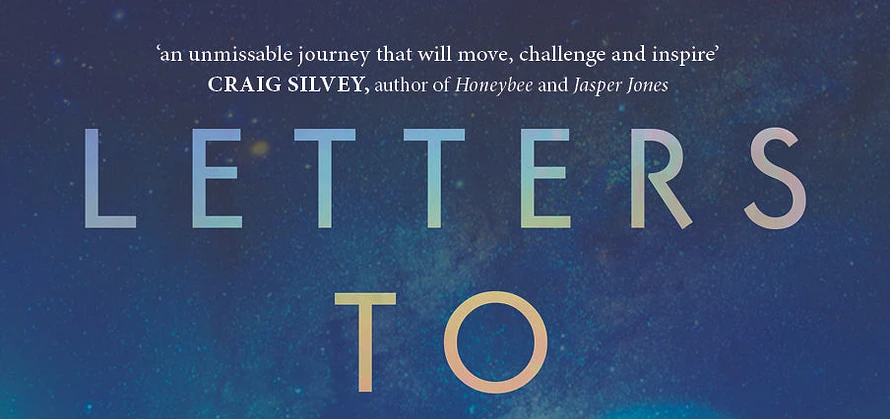
I now have the fear and paranoia of: will that endorsement, blazing on the front cover of my novel, turn people away from even touching it?
There was absolutely no way I could have known how events would transpire - Craig was nothing but kind to me, offering me wisdom and opportunities - but it does illuminate the danger in pinning your work to the tick of others.
Keep in mind: Endorsements are losing some sway
A recent article in the Sydney Morning Herald explored, quite rightly, how endorsements are often incredibly biased. The article was titled: Down with ‘unputdownable’: Is there a case for boycotting book blurbs?
You can read it here.
It's fair to say that endorsements are often a bit of a circle jerk.
In some ways, they're a two way street. If your book goes gangbusters, the person endorsing you gets to share in some of your glow, too. This tends to mean that when someone endorses your book and thinks it has a high chance of success, they will bury at least one or two great pull-lines in their endorsement text, knowing they’ll be the ones you use.
Sometimes, they’ll even let you suggest pull lines! (Or, you’ll be less than subtle in suggesting them anyway).
When I give endorsements (which is rare), I do so offering to let the person edit my endorsement as required - mostly to let them remove unnecessary/unwanted text without having to add “…” in between parts of the sentence. It helps make everything cleaner.
And because I only give them to people I really trust, I give them the option to edit knowing they’ll do so wisely and fairly, and that they’ll probably check with me first.
So there you have it. That's how the sausage is made.
Go get praised by someone cool (but remember - it'll probably be a polite pass from me).