






Next up in the Writer's Knowledge series is the world of Feedback during development.
This article pairs with Writer's Knowledge: Endorsements as a Form of Social Capital (or luck)
For writers, the best feedback is a suppository; you take it up the bum. Your arse is showing, the whole thing is uncomfortable and you have to sit in that discomfort for a while.
We do it because taking feedback makes our work stronger, because it helps us test how our work is being received, because it helps elevate our work from string-of-thoughts to conversation. Good feedback can be a true gift that leads to growth as an artist.
Although just like any bitter pill that you’re prepared to ingest bumwise, it pays to be careful who gave it to you. You don’t want to be getting your suppositories from a toothless, gangly, back-alley huckster when it’s going in your rear end.
Today we’ll explore taking feedback chronologically to process - from drafting through publication. We’ll look at:
Pre Publication:
The Original Reader (Rarest)
Draft Two Readers (Rare)
Resonant Readers (Uncommon)
Publication & Marketing:
Proofreaders / Editors (Systematic)
Endorsement Readers (Social Capital)
The Original Reader
When: Your writing is still in progress / hot off the press / first draft
Rarity: The Rarest of the Rare
Original Readers are people you trust implicitly. They will be seeing your work at your most vulnerable time, so you need to make sure that you choose someone fucking special. They don’t have to be technically minded or another writer/artist, but they do have to appreciate story, and they have to know you at a fundamental level.
For me, my fiancee Amanda is always my Original Reader.
In the past I’d give her a chapter or two at a time, and while she’s reading my words, I read her. I watch for subtle reactions like frowning or expanding eyes, the speed with which she reads pages and the most joyful of responses - smiles and laughter.
When she laughs, I quickly ask her: “Which bit?” to see the exact moment that tickled her.
Resonant Connection
When she’s done with a chapter, I ask her response to it. First a, very open question: “Tell me about this chapter”. I let her decide what it is she wants to tell me. This is to scoop of any top-level ideas, the Resonant Connection: the first & best remembered things are those which resonated most.
Tone & Emotion
Next, I ask her what she felt about the read, because this helps me shape tone. I begin simply with “What did you feel reading this?” for a quick summary of emotions and then “What was your favourite part?”, before going more granular: “What did you feel about {character} saying {the thing}” or “How did you feel about {character} doing {the action}”.
It’s best to treat it like a funnel - start wide and become granular over time, because while some guidance can be helpful in taking feedback, the strongest responses usually come the quickest, and you don’t want to miss out on something juicy by prioritising less important elements of your chapter - Original Readers might spot things you missed because you are too close to the work.
Testing Purple / Sharpening your Keys
Finally, I’ll ask for some quick responses at a technical level, asking which pieces of the writing itself she enjoyed the most, before I ask about my “key” sentences and paragraphs, or my most “purple” ones - the ones I adore, or which represent weeks or months or years of me compressing and compressing thoughts to make the most refined, beautiful idea possible.
Unless your Original Reader is a writer themselves, they will likely not be of the most use in exploring these purple sentences, so it’s best not to linger for too long on these - other feedback readers can help you with that, especially your Draft Twos.
Draft Two Readers
When: You have your second draft
Rarity: Rare
Don’t be that writer who flings first drafts around to anyone but your Original Reader.
YES, you should check for errors, including spelling errors - because they jar readers. NO, it doesn’t have to be perfect, but you should at least have had one pass at improving on your first draft before handing it over - this is simply the respectful thing to do and moreover: too many errors are hard to get past for any reader. Like asking someone to sit on a wobbly chair, or a stained mattress - it works, but it’ll give them the ick.
A limited number of Draft Two Readers must be chosen with this simple idea in mind: Avoid the Chuff.
The most dangerous thing you can do is give your work to someone who is so chuffed to be a part of your process that they’ll say anything to impress you.
In the same way that many bureaucrats and especially managers create problems to justify their positions (“invent the problem, sell the solution”), chuffed readers will just make shit up, offering asinine suggestions that send you down rabbit holes and cause you to doubt yourself (and your process). Chuffed readers are trying to impress you by appearing active and responsive, but their ego blocks truth, and only truth is useful to you at this stage.
Draft Two Readers should have appreciation of writing, structure and story. They don’t need to be masters of the craft (although - if you can find one of those, go for it!). But they do need to be technically minded, which can make them hard to find - or often, they’re very time-poor.
Sometimes, it can be helpful to have a list of pre-prepared questions for Draft Two Readers. Break the questions into two types:
Questions to consider while reading
Do NOT offer too many of these, because people just can’t hold that much in their minds at a time and moreover - it might overly influence how they read the work. Such questions should speak to something you think may not be obvious, or to something you’re concerned may not be working, and often involve the themes you intend to explore in the work.
Questions to consider after reading
Give these to your Draft Two Reader after they give their initial impressions. As with your Original Reader, their quickest, top level thoughts are usually the most valuable, because they represent the strongest connection to your work. But it can be helpful then to have questions to prompt them with afterwards, to test specific ideas/images/themes/characters/structure/plot etc.
Resonant Readers
When: You have a submittable/shoppable manuscript
Rarity: Uncommon
Resonant Readers are friends and family, people who might not have technical skills but who can provide insight at an audience/average person level. Their best contribution to your work is typically to test what things stuck out for better or worse in a story, the things which resonated with them.
It’s all about the feels
It’s better to ask them broad questions around how they felt - about the work as a whole or about specific elements. Asking them what or how they felt is most likely to draw out truth, while avoiding the chuff.
Chuff is useless to you, it’s ego dust.
Only truth is useful, and how people feel about something is nearly always true.
It’s easier to find Resonant Readers than other kinds - but just beware of two things: First, not many people can read quickly these days. You might find it takes them a while, so don’t hassle them or take their silence as judgement.
Deadlines
However - it can be useful to set a fair deadline in advance. Tell them you need feedback within XYZ - and make it a generous amount of time, not a mere week or two.
Remember: Shame
Be aware that the inverse of chuff can rear its head: shame. If your Resonant Readers don’t get time to read your work, or if they don’t enjoy it, you might find this fosters a feeling of shame in them, and they might become embarrassed to approach you.
A couple of years back I put a call out on my private Facebook profile for friends who might want to read an early copy of my Shazza Slays a Dragon. A highly experimental novel written & edited by locking myself in a room for 21 days - begin so experimental it wasn’t everyone’s cup of tea. Of the half a dozen people who put their hands up to read it, only one returned feedback.
To this day, several of those Resonant Readers still haven’t talked to me since - about anything. They’ve vanished from my life.
I’m not concerned that the work itself caused this, rather I think their perceived shame and embarrassment that they weren’t “useful” to me, or that they didn’t connect with the work, created a wedge between us.
Remember: It means more to you than them
So while it’s easier to find Resonant Readers, just be prepared that some people like the idea of a thing more than the action of doing it; and be prepared to be understanding, patient and grateful - as artists, our work often feels like so very much of our lives, but to our readers it can simply be “a thing” or “a bit of entertainment”.
Proofreaders / Editors
When: You have a book deal with a publisher
Your publisher will often have top level notes when you first meet or sign with them, and you’ll be given some time to address those - usually a few months. Once you’ve had that chance, your work will be turned over for editing.
These are the people who check for mistakes, not just in your technical writing but in your logic, structure and world building. They also help make your writing pop. Often, they are highly accomplished editors who work across a lot of different titles, so it’s wise to take the considerations on board.
However, you don’t need to do everything they suggest. Sometimes writers can be afraid of pushing back against editors. My approach is typically to find a compromise when I don’t feel strongly about an element (a word, sentence, paragraph, idea etc), but at other times to politely decline when there’s something I very much want to keep.
Sometimes, I’ll keep what appear as errors or unconventional techniques, and I’m known for inventing my own words, or mis-using words against their definition.
I give zero shits about the “right” way to do things or the “rules” of writing. Instead, what drives me here is my understanding of language, and my trust that readers’ flow won’t be broken. If I introduce something unconventional and it confuses people and makes them slow down, if it “breaks the spell” of their reading flow, it’s probably worth tossing out.
But if readers still feel something, even if they don’t understand it, I’ll often keep such contradictions or stylistic choices, because it speaks to my own authentic voice as a writer. Those are the things I’ll push back against with editors.
Ideally, by the time I get to working with an editor, I’ll have already tested those elements with other feedback readers, to have some insight which gives me confidence.
Endorsement Readers
When: Several months pre-publication - the sooner the better, and absolutely before “final pages” - the pages your publisher is sending to the printer.
Endorsements are those blarey things which appear on book covers or the inside pages, on bookshop listings and posters/banners. They say really wonderful things about a book and lend it clout.
I’ve written a separate article on Endorsements and released it at the same time as this one, which you can read here.
How to take all feedback
Always, always, always - with patience and gratitude.
Recently, I gave my Amanda a draft of Passing, my most recently completed novel.
For the first time, I gave her the completed work instead of individual chapters, and I didn’t watch her for reactions to every chapter - I sent her off with it, regularly checking in every few chapters. It took her several weeks to read it, and she found the middle of it a bit of a struggle.This was the first time she’d ever responded to any of my writing in this way. Usually, she devoured it. She loved the opening, and loved the ending, but she confessed to struggling with the middle - not uncommon in writing, which leads to the term “soggy/saggy middle”.
Initially for her it was an uncomfortable thing, because she didn’t want to disappoint me or to criticise my work, but I encouraged her to be as open and honest as possible - because only an honest reaction is useful in feedback. Chuff and protecting my feelings are both equally ego dust.
It wasn’t easy for me to hear, either.
I’d wanted to move on, to get ready to pitch it to publishers, to start writing something else. But the truth was - I knew in my heart of hearts that something was off with the novel. I simply couldn’t figure out what it was - and neither could Amanda precisely diagnose it for me, she could simply reinforce my feeling that something was off.
Which is when we sit in it
Amanda's feedback, however uncomfortable, like a suppository up the bum - was such a gift!
Once I let go of the desire to have my work “done”, I was able to walk away from it, to give it time to breathe. I filled my calendar with events and busy work, to create as much distance as possible from the novel.
Because I couldn’t clearly see what was wrong with Passing, only time and marination can help. The longer I spend away from it, the clearer my re-reading will be. Meanwhile, I’ve spent many dozens of hours reading the work of others, talking with other authors and watching YouTube videos on techniques, trying to help diagnose what is off.
I’m now almost three months away from having finished the novel and receiving Amanda’s feedback. I’d lined up a professional read from Beejay Silcox, who offers it as a paid service - however I’ve delayed actually sending it to Beejay, because I’ve begun to get a sense for why the novel wasn’t working.
Before I give it to Beejay (a Draft Three reader in this instance), who will do an incredible job assessing it for me, I need to have grown as a writer and revisited the novel with clear eyes. It will likely be several months now before it’s ready for that.
But sometimes - that’s how it goes.
Good feedback is like that; you take it up the bum and you sit with it.
Then your work gets better, and you grow.

This article pairs with Writer's Knowledge: Feedback is a Pretty Great Suppository
Who doesn’t love some praise? It can help buyers decide on a purchase, and it feels fuckin’ good to boot.
Endorsements are those blarey things which appear on book covers or the inside pages, on bookshop listings and posters/banners. They say really wonderful things about a book and lend it clout. They say really wonderful things about a book and lend it clout via praise.
Ideally, you’ll want to get endorsements as soon as possible - although only ever with the most complete work possible (ie; not a first draft!)
Be aware: publishers almost never gauge accurately how much time you’ll have to gather them - in my experience they always overestimate it. And they won’t help you gather them - the knowledge of your book deal is help enough; it validates you.
Pull Lines
Endorsements often come down to one or two juicy “pull lines” from within a couple of paragraphs of praise. These are the lines which make it onto the front and back covers, with the rest of the text often going inside the early pages.
There are two types of endorsements and two methods of getting them.
Type One: Generals
These are usually short sentences about you as a writer/artist, not so much your work itself. Often you’ll get these from a “big name” who doesn’t have time to actually read your manuscript, but who sees something in you and wants to stake a little claim in your career.
The benefit of them being non-specific is that you can re-use them across different work. They can also be given at any time prior to final pages, making them easier to source - but they have a higher trust threshold.
Never ask for these via the “Hail Mary” method (see below). These can only come from people who know you and believe in you - it’s disrespectful to ask for a General from anyone else.
An example is the one Benjamin Law gave me: “Cadance Bell is the Human Equivalent of Halley’s Comet: A Once in a Lifetime Blazing Talent.”
Ben and I had known each other a couple of years by this point - he’d seen me perform my work on stage at various events, including Queerstories. I was a known quantity to him and most importantly, he knew my star was on the rise because I was beginning to sign deals - at that time I’d had a documentary and deal with Penguin Random House for my memoir, so I was already on my way.
While Ben didn’t have time to read my manuscript, he loved my work and trusted me, and gave me a corker of a general.
Type Two: Avid Pros
These are people who are responding to your specific work. You’ll need to give them firm deadlines, and to be respectful of their time. If it’s possible to get the work to them many months ahead of final pages, do that! The very best time to get them is pre-submission to publishers, so that you can use their endorsements in your pitching. However, professionals are often reluctant to do this until you have a deal in place with a publisher, because then they know that they’re not wasting their time on something which may not ever see the light of day.
If you’re asking pre-submission, you’ll usually either want to be really close friends with immense trust, or you’ll want to have a lot of runs already on the board to inspire confidence.
Make no mistake: endorsements are a form of social capital.
You are not owed an endorsement by anyone. Receiving them is to accept an act of grace, a privilege. When you ask an Avid Pro for an endorsement, you’re asking them to give up a week or so of their own life and craft to read your work - that has a direct “value” in both time but also reputation.
You will find it easier to collect endorsements as your career grows, so it’s better in the beginning to set your expectations low and be pleasantly surprised, rather than to expect anything.
How to get Endorsements
Method One: Use some Social Capital
There’s an old saying: “It’s not what you know, it’s who you know.”
I think fundamentally that saying is missing an important component, because it’s “who you know and who you are.” This means you must be known to the endorser, or you must possess some social capital. You don’t have to be accomplished, but you do need to be on the rise, you have to have some momentum behind you.
It helps if you also know the person you’re asking at more than a superficial level. Friends, sure - but more than that, you have to understand what kind of artist or influencer they are. Find those people who will connect with your work - maybe they share interests, genres, friends - because ideally you want an endorsement to be glowing.
Tip: Developing these relationships takes time.
There’s nothing more frustrating as a writer than someone who comes up to you after an event at a signing desk and says “I’ve written my own novel, will you endorse it for me?” Authors are there to celebrate their own work, not to take on yours.
Personally, I would never give an endorsement to someone who I hadn’t known for several years, and I never give them to people “just because”. I need to feel that they have earned it, that it will help their career, that they aren’t just using me. I want to be inside their magic, not a raft.
Method Two: The Hail Mary
This is where serendipity comes into play, and you just hope for the best.
Hail Mary endorsements are those which you fire off to people who you may not know personally, but to whom you know would be an ideal endorser - either because they’re big in your genre/field or because they’re just a big name full stop.
They are best done via email to agents or reps; try not to put people on the spot in person.
Sometimes, rarely, you might “know someone who knows someone” and you can get a direct contact to the person. Don’t be offended if they don’t make the connect for you, as relationships can be complex.
I once had a contact who worked with Oprah Winfrey - foolishly, I gave it away to a fellow writer who had “asked the universe” for just such a contact (and I obliged), but ultimately the writer butchered their pitch by being too expectant and demanding, and now that contact views me less favourably (and they no longer work at OWN) and worse - the writer somehow feels I’ve let them down (or they’ve let me down).
Ask via reps
More often than not - you’re best to approach the person’s agent or publisher, and lay it out as a Hail Mary request. The success rate of this is very, very low - but sometimes, it works.
My friend Lech Blaine got Tim Winton’s endorsement on his debut memoir Car Crash via a Hail Mary to his agent. And Maria Lewis, who I’ve worked with in writers rooms, got Patton Oswalt’s endorsement via a Hail Mary for her novel The Graveyard Shift.
Personally - I’ve never gotten a Hail Mary endorsement, although I’ve attempted them (most recently to Stephen King’s agent - no luck!). I have, however, had success with Hail Mary’s in other ways - usually for industry people in screen or venture capital, while seeking mentorship or financing.
Always go Straight at a Thing
Whether you’re using social capital or having a crack at a Hail Mary, don’t fuck around when asking for endorsements.
In your email / message / call, ask immediately; don’t bury the lead.
Personally, I -loathe- receiving emails or messages that begin: “Dear Cadance, congratulations on all your success.” (You’d be surprised how often I see this).
When a person lacks specificity on what that “success” is, it’s an immediate tell that they don’t respect my work, they simply acknowledge that I possess social capital of some kind, and they want something from me.
When you receive a lot of requests for endorsements / connections / resources or advice, you can sense when an ask is coming, and you’ll usually skim right to it, especially if it’s a long request.
It’s best to ask straight away:
Hi Person,
I’m writing to ask for an endorsement for my book.
Or:
Hi Person’s Agent,
I’m reaching out with a Hail Mary request for an endorsement from {your author}.
And *then* explain who you are, about your project and ideally why you’re asking that particular person. Don’t beg, don’t waffle, don’t flatter to death. Keep the email as brief as possible.
Endorsement Readers are often very time poor, with little bandwidth. Always remember that when you ask for their time to read your work, they’re not creating their own. Many authors don’t earn that much money, so it’s only reasonable they should prioritise their own craft over yours.
Often it comes down to luck. You’ve emailed at the right time, when someone was receptive and available, and saw something in you. But you can almost never know this in advance, so try to hold gratitude in your heart no matter the outcome of your request.
Gratitude unlocks comfort in the unknown.
Keep in mind: Endorsements can bite you
One of my favourite ever endorsements was the following: “Cadance Bell is a mercurial genius, a fearless imagineer.”Why? I’d been looking for someone to call me a mercurial genius for a while. I like the phrase - the fact that it sits between genius and madness feels like my exact speed. So when the opportunity presented itself, I happily slapped it on Letters to Our Robot Son.
The problem? That endorsement was by Craig Silvey, who was earlier this year charged with some pretty heinous crimes. Craig and I had known each other a few years, we’d done events together and I was co-creating the screen adaptation of his hit novel Honeybee.
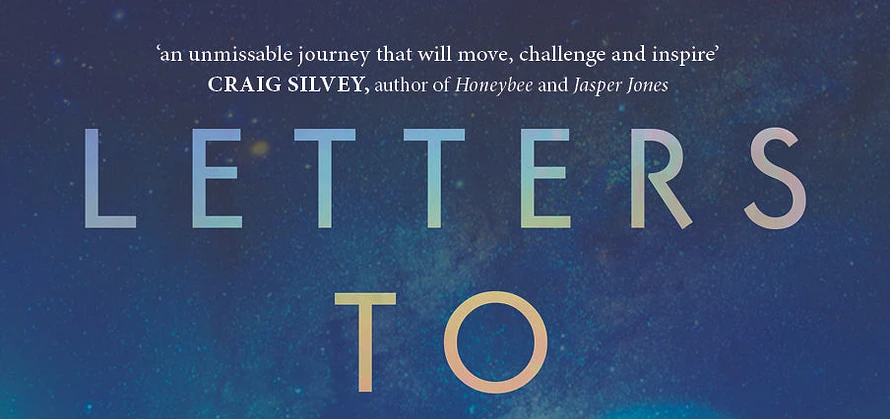
I now have the fear and paranoia of: will that endorsement, blazing on the front cover of my novel, turn people away from even touching it?
There was absolutely no way I could have known how events would transpire - Craig was nothing but kind to me, offering me wisdom and opportunities - but it does illuminate the danger in pinning your work to the tick of others.
Keep in mind: Endorsements are losing some sway
A recent article in the Sydney Morning Herald explored, quite rightly, how endorsements are often incredibly biased. The article was titled: Down with ‘unputdownable’: Is there a case for boycotting book blurbs?
You can read it here.
It's fair to say that endorsements are often a bit of a circle jerk.
In some ways, they're a two way street. If your book goes gangbusters, the person endorsing you gets to share in some of your glow, too. This tends to mean that when someone endorses your book and thinks it has a high chance of success, they will bury at least one or two great pull-lines in their endorsement text, knowing they’ll be the ones you use.
Sometimes, they’ll even let you suggest pull lines! (Or, you’ll be less than subtle in suggesting them anyway).
When I give endorsements (which is rare), I do so offering to let the person edit my endorsement as required - mostly to let them remove unnecessary/unwanted text without having to add “…” in between parts of the sentence. It helps make everything cleaner.
And because I only give them to people I really trust, I give them the option to edit knowing they’ll do so wisely and fairly, and that they’ll probably check with me first.
So there you have it. That's how the sausage is made.
Go get praised by someone cool (but remember - it'll probably be a polite pass from me).